02 / European partner laboratoryNon-destructive methods: nothing is sampled or altered without written agreement

WWA / European partner laboratory

Scientific examination of paintings

Non-destructive examination that answers a precise question about a work — its materials, its condition, its history or its signature — recorded in a written report you can show to an insurer, a buyer or an institution.

Send your inquiry

Direct access. No brokers, no commission.

01

Non-destructive methods: nothing is sampled or altered without written agreement

02

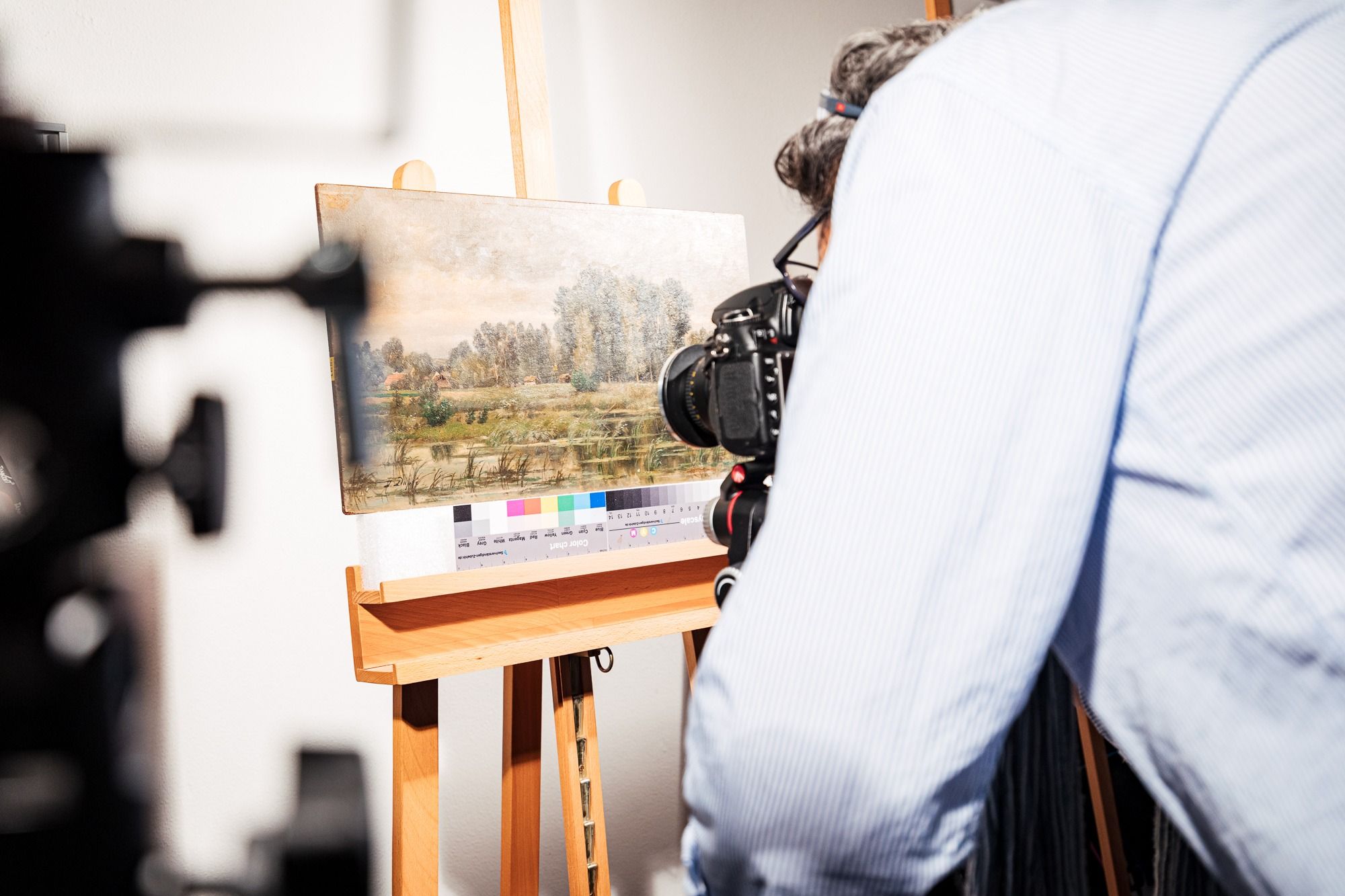
Technical photography in visible, ultraviolet and infrared light

Direct access. No brokers, no commission.

WWA is part of the same company and only runs these pages and screens requests. We do not issue quotes, take commission, or act as brokers. Serious, relevant inquiries are put in direct contact with the right specialist straight away.

WWA / Scope

What an examination can cover

The scope is set with you before we begin, according to the question you need answered.

Send inquiry

01

Condition and materials

  • Technical photography (VIS, UV, IR)
  • Microscopy of paint and varnish layers
  • Multispectral imaging and XSpecam examination
  • Written condition report with image documentation
02

History and attribution

  • Provenance dossier assembled from available records
  • AI-assisted signature analysis
  • Diagnostic examination of earlier restorations
  • Economic estimation of the work

WWA / Technologies

The methods we use

Each method answers a different question. We choose only those your work actually needs.

01

Technical photography

Surface, texture, canvas and relief, documented in precise detail.

  • —Visible Light Photography
  • —Visible Raking Light
  • —Transmitted Light (TL)
  • —Detail Photography in VIS
  • —Macrophotography in VIS

02

Microscopy

Paint layers, varnish and cracks, seen at close range.

  • —Visible Light Microscopy
  • —UV-Induced Visible Fluorescence Microscopy (UVIVFL)

03

Multispectral imaging

What lies beneath and around the visible paint, such as retouching and underlying layers.

  • —Transmitted Infrared Light (IRTL)
  • —UV-Induced Visible Fluorescence (UVIVFL)
  • —Near-Infrared Photography (NIR)
  • —False Colour Imaging (UVFC & IRFC)

04

XSpecam

Combined spectral imaging of the whole work.

  • —XSpecam

05

Artificial intelligence false colour

AI-assisted reading of ultraviolet and infrared images.

  • —AI False Colour UV (AIUVFC)
  • —AI False Colour IR (AIIRFC)

06

Spectroscopy

The chemical make-up of pigments and materials, measured without sampling.

  • —Raman Spectroscopy
  • —X-Ray Fluorescence (XRF)
  • —Fibre Optic Reflectance Spectroscopy (FORS)

WWA / Mandate

How an examination runs

A few lines and, if you have them, photographs are enough. Serious, relevant inquiries are put in direct contact with the right specialist.

  1. 01

    Your question

    You describe the work and what you need to know. We say plainly which methods can answer it and which cannot.

  2. 02

    Examination

    The work is examined in the partner laboratory using the agreed non-destructive methods, under controlled conditions.

  3. 03

    Written report

    You receive a documented report. Where a conservation or market question follows, we can take it further under the same mandate.

WWA / Screening

Tell us about the work

A few lines and, if you have them, photographs are enough. Serious, relevant inquiries are put in direct contact with the right specialist.

  • —Non-destructive methods: nothing is sampled or altered without written agreement
  • —Technical photography in visible, ultraviolet and infrared light
  • —Microscopy, multispectral imaging and XSpecam examination

Confidential — nothing is published or passed on beyond the specialists concerned.

Attachments (optional)

Your details are used only to screen and forward this inquiry to the right specialist. They are never sold.

Questions we are asked

Is the painting damaged by the examination?
The methods described here are non-destructive. Anything that would involve sampling is proposed in writing first and carried out only with your agreement.
Can an examination confirm who painted a work?
An examination documents materials, condition, earlier interventions and, where records exist, provenance. It supports an attribution question with evidence; it does not replace the judgement of the recognised authority for that artist.
Do you also treat the work afterwards?
Only if you ask. Examination and restoration are separate decisions and are handled separately by the right specialist.
What do infrared reflectography and UV examination reveal?
Infrared reflectography can show underdrawing and changes of composition beneath the paint. UV fluorescence shows later retouching, overpainting and varnish layers that are not visible in normal light.
Can an examination detect earlier restorations or overpainting?
Yes. Retouching, filled losses and overpainting are usually documented clearly through UV, infrared and microscopy, and recorded in the report.
What should be verified before acquiring a high-value work?
Materials consistent with the stated date, condition and earlier interventions, and the documented provenance. An examination before purchase gives you evidence rather than assumptions.

Ready to describe your work?

No quote, no commission, no broker. Your inquiry is read, screened and, if it is relevant, passed straight to the specialist who handles it.

Confidential inquiry

Send inquiry